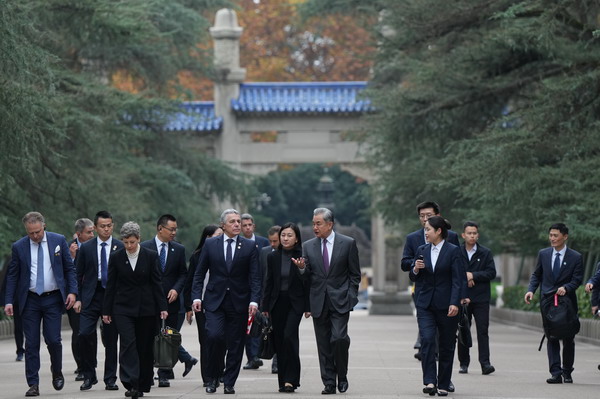
China and Switzerland Hold the 5th Round of Foreign Ministers’ Strategic Dialogue
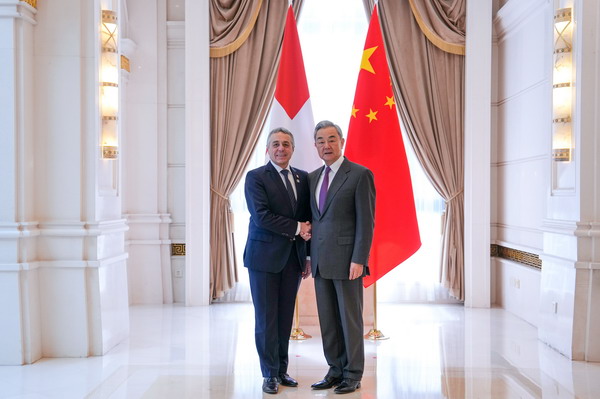
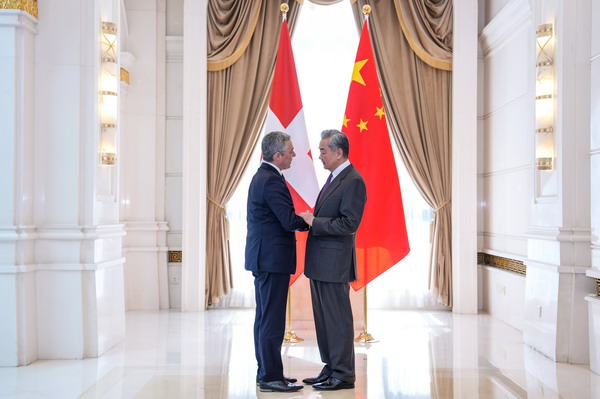
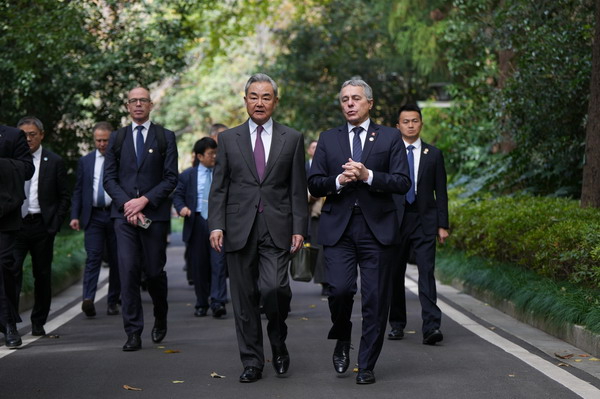
On November 23, 2026, Member of the Political Bureau of the CPC Central Committee and Foreign Minister Wang Yi held the 5th round of China-Switzerland Foreign Ministers’ Strategic Dialogue with Vice President and Foreign Minister of the Swiss Confederation Ignazio Cassis in Nanjing.
Wang Yi stated that this year marks the 10th anniversary of the establishment of the China-Switzerland innovative strategic partnership, making it a milestone year that builds on past achievements and looks ahead to the future, and one worth joint commemoration. Under the guidance of the leaders of the two countries, China-Switzerland relations have gained momentum in pursuing innovation and higher-quality development, steadily advancing at the forefront of China’s relations with European countries. President Xi Jinping and President Guy Parmelin jointly witnessed the signing of the protocol on upgrading the free trade agreement between China and Switzerland and other cooperation documents. This sends a positive signal of upholding openness and cooperation and safeguarding free trade, adding new dimensions to bilateral relations in the new era.
Wang Yi stated that the progress in China-Switzerland relations reflects the principles upheld by China’s diplomacy: first, treating all countries, big or small, as equals and opposing power politics; second, respecting each country’s independent choice of development path and refraining from interfering in its internal affairs; and third, leveraging complementary strengths to achieve mutual benefit and win-win results. China stands ready to work with Switzerland to implement the consensus reached by the two heads of state, strengthen exchanges in various fields and at all levels, and consolidate high-level political mutual trust. Mutual respect for each other’s core interests is the political foundation of China-Switzerland relations. It is hoped that the Swiss side will take concrete actions to oppose “Taiwan independence” and support China’s cause of national reunification. The two sides should work for the early entry into force of the protocol on upgrading the free trade agreement, as free trade cooperation will provide strong endogenous momentum for bilateral relations. China welcomes more Swiss enterprises to capitalize on the vast business opportunities in China’s development and achieve common development. Switzerland was the first country with which China established a strategic partnership featuring innovation. The two sides should strengthen coordination and planning on scientific and technological cooperation, carry out dialogue and cooperation on artificial intelligence (AI) at both bilateral and multilateral levels, and jointly promote the development of AI for the positive and for good, so that it benefits all humanity.
Wang Yi said that the successful practice of China and Switzerland has once again proven that protectionism is not a panacea, intertwined interests are by no means security risks, and openness and cooperation represent the right path to transcend the zero-sum trap and move toward a win-win future. China and Europe should break free from the so-called “trade imbalance” narrative trap, properly handle differences through dialogue and consultation, and achieve mutual benefit and win-win results by making the pie of cooperation bigger. It is hoped that the Swiss side will exert a positive influence on the smooth resolution of economic and trade differences between China and Europe. China stands ready to strengthen strategic communication with Switzerland, practice true multilateralism, reform and improve global governance, uphold international fairness and justice, and bring greater stability and certainty to a turbulent world.
Ignazio Cassis stated that over the past 10 years, the Switzerland-China innovative strategic partnership has remained strong and dynamic, achieving high-level development and delivering tangible benefits to both sides. Ten years ago, the two sides issued a joint statement underscoring the need to deepen mutual understanding of each other’s development paths and accommodate each other’s core interests. Switzerland upholds this spirit, firmly adheres to the one-China principle, and stands ready to enhance mutual understanding and trust with China, strengthen cooperation in various fields, and promote greater development of Switzerland-China relations. Next year marks the 10th anniversary of President Xi Jinping’s landmark speech at the World Economic Forum in Davos. The speech has had a far-reaching impact and continues to offer important guidance today. Over the past decade, China has become a key force in promoting globalization and addressing global challenges. Switzerland is willing to work with China to uphold free trade, oppose protectionism, jointly tackle climate change, strengthen global governance of AI, and jointly build an open and progressive world. He also hoped China would continue to play an important role in this regard.
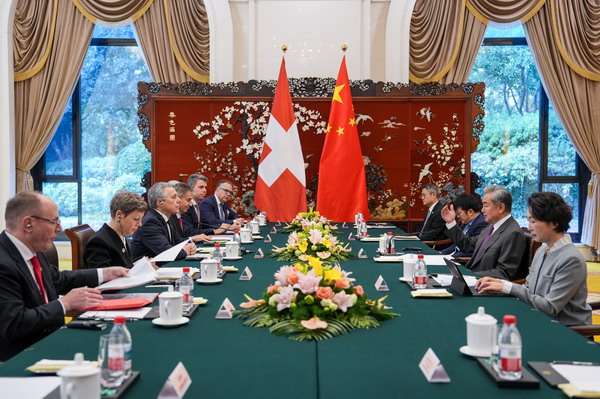
Both sides agreed to make good use of the dialogue mechanisms in various fields, expedite their respective domestic ratification procedures for the protocol on upgrading the free trade agreement between China and Switzerland, deepen mutually beneficial cooperation in such fields as finance, science and technology, intellectual property rights, AI, telecommunications and education, and further improve the China-Switzerland innovative strategic partnership. The two sides also agreed to jointly safeguard the international system with the United Nations at its core and the international order based on international law, and contribute to world peace, stability, prosperity and progress.
The two sides had an in-depth exchange of views on international and regional issues, including the Ukraine crisis.